
The concept of AYNI and the andean cosmovision
The Andean cosmovision is a living worldview that has been handed down in the Andes for thousands of years. It describes not only a philosophy, but also a way of life—in deep harmony with nature, fellow human beings, and one’s own inner being. Its core principle is Ayni, the law of sacred exchange and reciprocity: everything we receive, we pass on – to the earth, to the community, to life itself.
Ayni as a foundational principle that expresses sacred reciprocity and balance is not just an economic exchange, but a way of living in right relationship with the world. The word comes from Quechua, and while it’s often translated as “reciprocity,” its meaning is much deeper—it reflects a worldview where everything is interconnected: humans, nature, ancestors, and the cosmos.
What ayni means in the Andean worldview
Reciprocal exchange: At its simplest, ayni is the mutual help between people—if I help you today with planting your crops, you will help me tomorrow. But this is never seen as a debt; it is a natural flow of giving and receiving. You can see it as giving something in the great river of life, knowing that this river will bring to your shore what you need when you need it.
Balance with nature: The Andean peoples see the earth (Pachamama), mountains (Apus), the water and water spirits (Nustas), the sun and the moon (just to name a few – there are many more) as living beings. To take from them without giving back would disrupt harmony. Offerings, rituals, and respectful use of resources are all ways of practicing ayni.
Cosmic order: For the Andean cosmovision, harmony within yourself, in the community and in the environment mirrors harmony in the cosmos. Ayni is thus the law that keeps balance across all realms of existence.
Why ayni matters in today’s world
Ecological sustainability: Our global ecological crises—climate change, deforestation, pollution—can be understood as a breakdown of reciprocity with nature. Ayni reminds us that we must give back to the Earth, not just extract from it.
Community resilience: In a time when individualism and competition dominate, ayni offers a model of cooperation, mutual aid, and solidarity. This can strengthen social ties and reduce isolation.
Spiritual reconnection: Many people today feel disconnected from meaning or from the natural world. Practicing ayni—through gratitude, mindful consumption, or acts of service—can restore a sense of belonging within a greater web of life.
Global balance: On a larger scale, ayni can inspire fairer economic and cultural exchanges between nations, addressing inequality and fostering more respectful relationships across differences.
In short, ayni is more than tradition; it’s a universal principle of balance, gratitude, and reciprocity. In the Andean cosmovision it sustains life, and in today’s world it offers a path to healing—both ecological and social.
Ayni as a path for personal growth, healing, and holistic wellbeing
If you choose to live in Ayni, and you align yourself with the principle of sacred reciprocity: the continuous flow of giving and receiving between people, nature, and the cosmos, this alignment becomes a powerful medicine for personal growth and holistic wellbeing.
1. Cultivating Balance Within Yourself
Living in ayni teaches you that giving and receiving are not separate but part of the same cycle. Many of us struggle with imbalance—we give too much and burn out, or we only receive and feel empty. Practicing ayni restores this inner harmony, allowing you to open both your capacity to offer and your openness to receive.
2. Deepening Connection and Belonging
Ayni reminds you that you are never isolated; you are part of a living web of relationships—with your body, with others, with the Earth, and with spirit. Recognizing and honoring these bonds dissolves feelings of disconnection and brings a profound sense of belonging.
3. Awakening Gratitude and Presence
Every act of reciprocity is an act of gratitude. By giving back consciously—to the land that nourishes you, to your own body, to your community—you train your awareness to notice the gifts that already surround you. This practice naturally grounds you in presence and cultivates joy in the everyday.
4. Strengthening Resilience and Flow
When you live in ayni, challenges are no longer seen as obstacles but as invitations to exchange energy differently. Life becomes a dance of flow rather than a struggle against resistance. This perspective fosters resilience, trust, and an ability to navigate change with grace.
5. Expanding Spiritual Growth
Ayni opens you to a sacred way of living where every exchange—whether with a friend, with a river, or with your own heart—is recognized as holy. In this awareness, the ordinary becomes ritual, and your spiritual path becomes woven into daily life.
To live in ayni is to walk in harmony with yourself and the world. It nourishes the soul, calms the mind, strengthens the body, and awakens the heart. In holistic work, embracing ayni can be a powerful foundation for healing, transformation, and living with purpose.
AYNI and the 7 levels of holistic health
Physical – Through AYNI with the body, we honor its wisdom by listening, caring, and offering movement, rest, and nourishment. In return, the body supports us with strength, vitality, and resilience.
Emotional – In reciprocity with our emotions, we allow ourselves to feel, express, and release. When we give space to our inner world, we receive clarity, compassion, and emotional balance.
Mental – Practicing AYNI with the mind means engaging in continuous learning and reflection, while also allowing stillness and presence. This creates harmony between curiosity, focus, and inner peace.
Social – At the community level, AYNI is expressed through respect, empathy, and collaboration. By offering support and receiving it in return, we weave healthy, nourishing relationships.
Environmental – In relation to nature, AYNI reminds us that we are part of the Earth, not separate from it. When we live in reciprocity with Pachamama — caring for her as she cares for us — we find true belonging and sustainability.
Spiritual – With spirit, AYNI teaches us to open to guidance and to honor the unseen. In offering rituals, gratitude, and presence, we receive connection, meaning, and purpose.
Energetic – On the subtle level, AYNI is the exchange of energy in all its forms. When we align our energy with balance and reciprocity, we restore flow, vitality, and harmony across all aspects of life.
Together, these seven levels create a map of holistic health where AYNI is the golden thread — reminding us that true well-being is not achieved in isolation, but through living in balance and exchange with all of life.
How to integrate Ayni in our Lives?
There are thousands of ways, but a very powerful one is through rituals, the Language of our Soul
Rituals reach us in a way that words alone cannot. They speak directly to the soul, bypassing the logical mind and awakening a deeper knowing within us. While our thoughts are shaped by language, logic, and reason, rituals move through symbols, gestures, and energy – the original language of life itself.
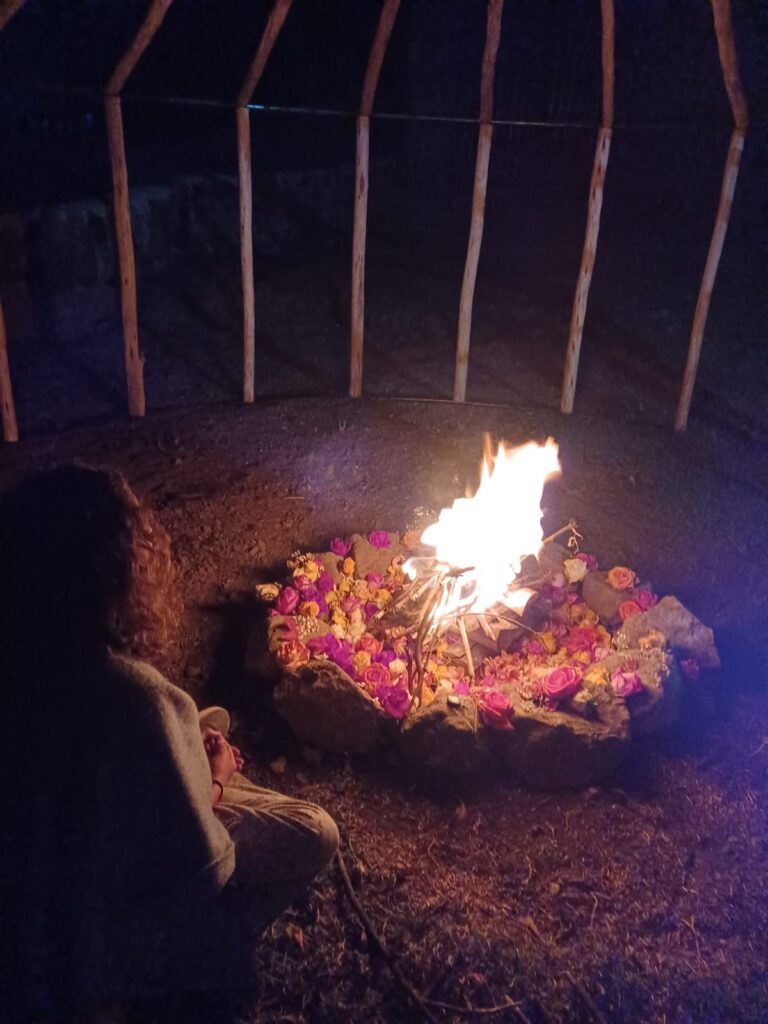
When we light a candle, place flowers in an offering, or release a prayer into the fire, something shifts beyond the visible act. The soul recognizes the gesture. Energy responds. The invisible realms – nature, ancestors, the cosmos – understand and participate in this dialogue.
Rituals open a space where:
Intention becomes form – our prayers and inner visions are woven into the material world.
Energy moves and transforms – what is stagnant can be released, what is needed can flow in.
The heart leads – we reconnect with the intuitive, feeling part of ourselves that knows unity and sacredness.
In this way, rituals are not just ceremonies outside of us – they are mirrors of our inner world. They help us align with the rhythms of nature, harmonize our energies, and embody the principle of ayni.
In the Andean tradition, rituals are not mere ceremonies, but living bridges that connect us with the natural world, our communities, and the spiritual forces of the cosmos. At their heart lies the principle of Ayni. Everything in life is based on exchange: we receive from the Earth, the waters, the mountains, the stars – and in return, we give back through offerings, prayers, and acts of service.
One of the most beautiful expressions of this principle is the Despacho ceremony.
Despacho – the offering bundle
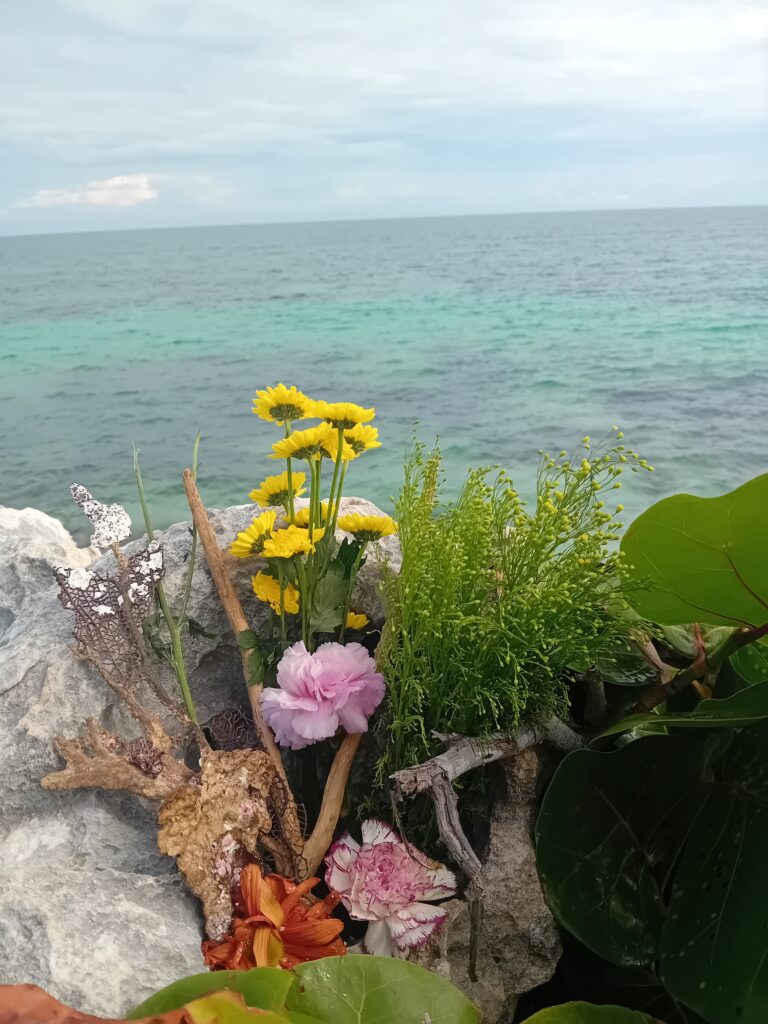
A despacho is a carefully crafted offering, created with natural elements such as flowers, seeds, grains, herbs, sweets, or small symbolic items. Each element carries intention and prayer: gratitude, healing, balance, or blessings for the future.
The act of creation becomes a meditation in itself – each placement is done with mindfulness, weaving together our inner world with the outer world.
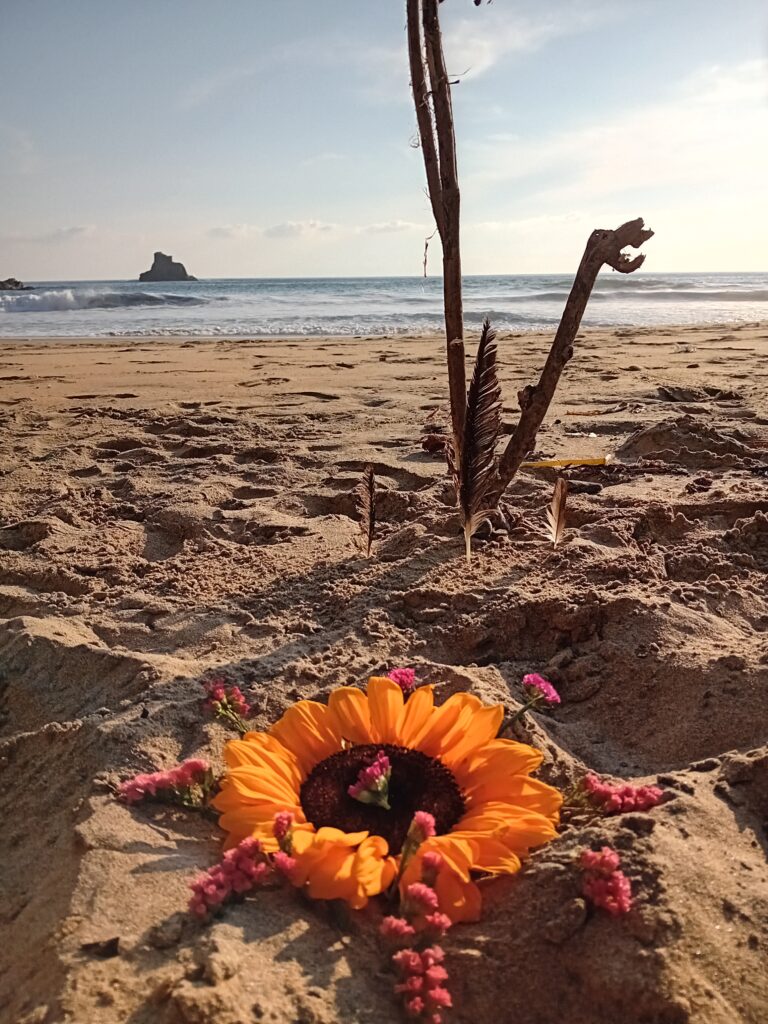
The offering is then gifted back to nature – through burial in the Earth, immersion in flowing water, or transformation in fire. In this way, we restore balance between giving and receiving, human and nature, visible and invisible realms.
Fire ceremonies
Fire is a powerful ally for transformation. In Andean fire rituals, we release what no longer serves us – old patterns, heavy energies, limiting beliefs – and offer them to the flames. Fire consumes and transforms, opening space for renewal, clarity, and inspiration.
Water blessings
Water rituals remind us of the flow of life. By offering prayers, flowers, or seeds to rivers, lakes, or the ocean, we honor the waters that nourish and cleanse all beings. In turn, we ask for purification, emotional healing, and the capacity to move gracefully with life’s currents.
Earth offerings
Simple acts like planting a seed with intention, touching the soil with gratitude, or sharing food with the land and its creatures are also rituals of ayni. They remind us that we belong to the Earth and that our wellbeing is inseparable from hers.
Why rituals matter today
In our fast-paced world, rituals invite us to pause and reconnect. They teach us that healing is not just about the individual, but about restoring harmony in the whole web of life. Through despachos, fire ceremonies, water blessings, or simple daily acts of gratitude, we can practice ayni and cultivate a sense of belonging, reciprocity, and balance.
Working with me you will learn how to integrate rituals into your daily life, how to (re)connect back to your soul, with the living world around you and how to find back into Ayni and in balance with life.